Make More Room at Home with Loft Storage in Exeter and East Devon
Loft Storage Exeter & East Devon
Why the loft is worth a second look
When cupboards are full, spare bedrooms become storerooms and the garage is difficult to navigate, it is tempting to think that the only answer is an extension or a bigger home. But many properties in Exeter and East Devon have useful space above the ceiling that could be better organised. A properly planned loft storage area can give suitcases, seasonal decorations, spare bedding and other lightweight household belongings a dedicated home - without taking over your living space. The key is making the loft accessible and choosing a boarding system that suits the building.
What is raised loft boarding?
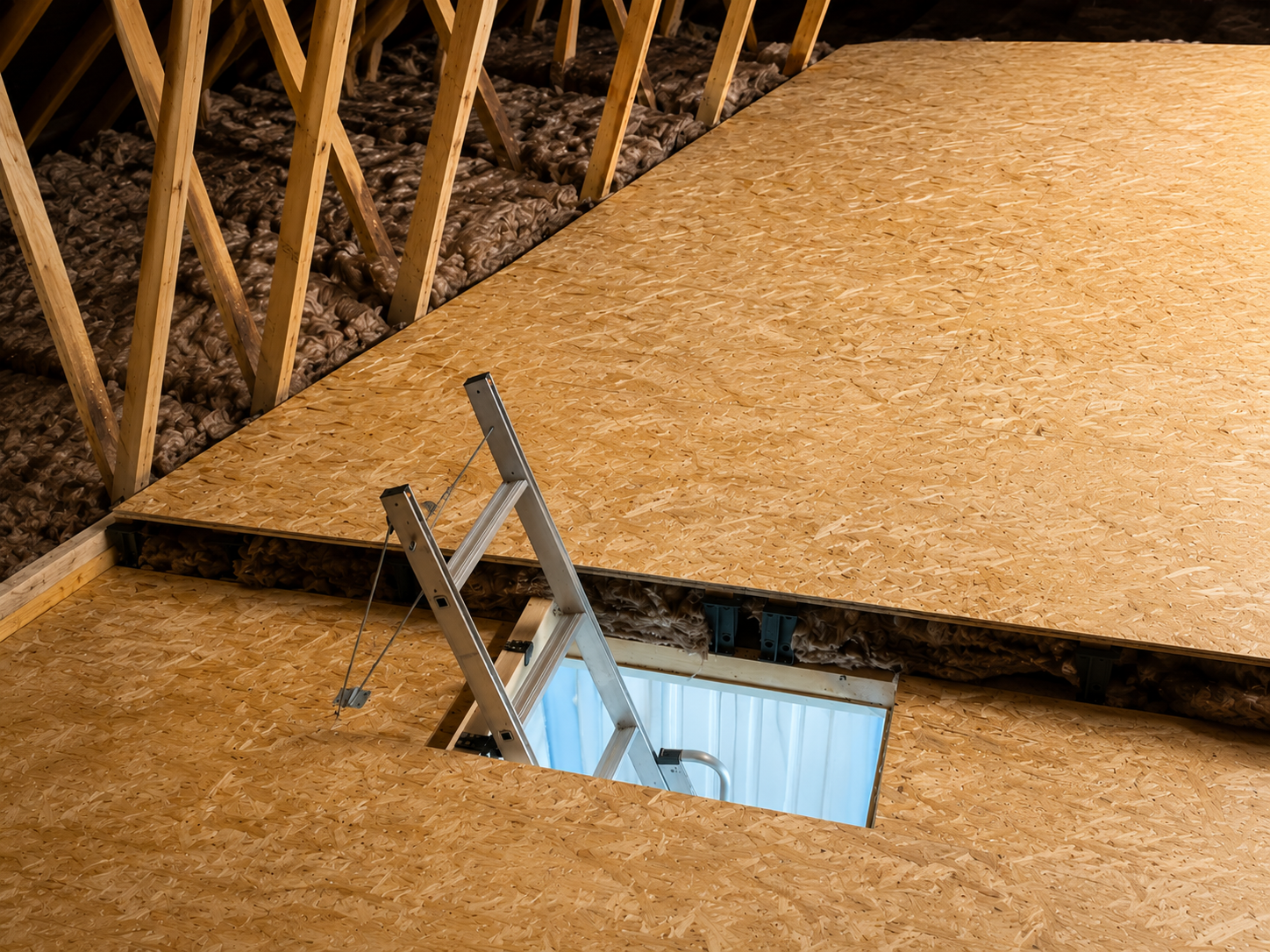
Raised loft boarding is a system in which a supporting framework holds storage boards above the existing ceiling joists and insulation. It creates a more convenient surface for suitable storage while helping to avoid compressing insulation beneath the boards. This is especially relevant in newer homes, where deep loft insulation may already be installed. Simply laying boards directly over thick insulation can reduce its effectiveness. A raised system is designed around the available insulation depth, ventilation routes and the loft's construction. It is not a substitute for checking whether the structure is suitable for the proposed storage loads.
Can you board the loft in a new-build home?
Often, yes - but it needs a careful assessment. New-build lofts can have modern trussed roofs, deep insulation and restrictions on how the space should be used. A storage installation should not cut, alter or overload roof trusses or obstruct essential ventilation. The original design and any applicable warranty conditions should also be considered. Before making a recommendation, we look at access, usable headroom, the existing insulation, the roof structure and the type of items you intend to store. Loft boarding creates storage space; it does not turn the loft into a habitable room.
Start with the access, not just the floor
A boarded area is far more useful when you can reach it safely. If you currently rely on a loose stepladder and a small hatch, you may benefit from a fitted loft ladder and a more practical hatch opening. Depending on the property, options can include folding timber ladders, aluminium ladders and compact access solutions. An insulated, draught-resistant hatch can also help reduce unwanted heat loss. A simple LED loft light makes it easier to find stored belongings, particularly on dark winter evenings. We can consider the boarding, ladder, hatch and lighting together so that each element works with the others.
How much of the loft should you board?
You do not necessarily need to board the entire loft. A modest area near the hatch may be enough for a few boxes, while a larger raised platform can help a busy household organise possessions by season. The best layout depends on headroom, roof timbers, access routes and the location of services. It is important to leave access to any equipment that needs inspection or maintenance, and to avoid covering electrical connections or restricting airflow. Shelving can sometimes add useful organised storage where floor area is limited. The right solution is the amount of space you will actually use, rather than the maximum number of square metres.
What should you store in a loft?
Lofts are generally best suited to appropriate lightweight, non-perishable household items stored in secure, labelled containers. Avoid assuming that a boarded loft can support heavy furniture, large book collections or other concentrated loads. Temperatures and humidity can vary considerably, so photographs, important paperwork, electronics and delicate fabrics may be better kept elsewhere. Keep access routes clear and do not stack boxes where they could fall or block ventilation. If you are unsure about the suitability of an item, ask before placing it in the loft.
A local survey makes the difference
Homes across Exeter, Exmouth, Sidmouth, Honiton, Crediton and surrounding East Devon towns vary widely in age and construction. A solution that works in one property may not be right for another. At LaddersaLoft, we favour a straightforward, personal approach: we visit, inspect the accessible loft, measure the proposed boarding area and discuss what you want to achieve. We then recommend a practical combination of raised boarding and access products where suitable. The survey is a visual assessment for quotation purposes, not a structural engineer's certification; specialist advice may be needed where structural capacity is uncertain.
Ready to reclaim some space?
If you are tired of boxes in the spare room or struggling to find somewhere for seasonal belongings, a well-planned loft storage area could make day-to-day life easier. LaddersaLoft installs raised loft boarding, loft ladders, hatches, shelving and lighting across Exeter and nearby Devon communities. Book a FREE loft survey and we will talk through the options for your home, without recommending work you do not need. Visit www.laddersaloft.co.uk or email enquiries@laddersaloft.co.uk to get started.